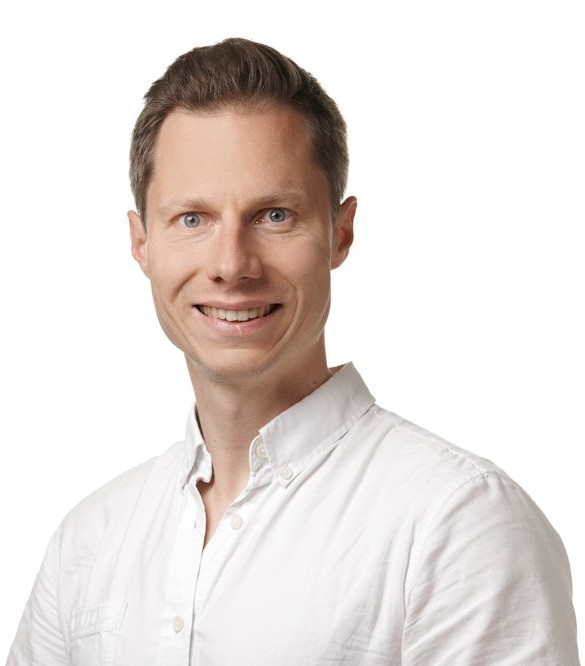
Bio
Professor Karol J. Borowiecki is a globally recognized authority in the economic history of the arts. He serves as President of the Association for Cultural Economics International, as the youngest president ever, and he leads the Arts and Creativity focus area at SDU. Renowned for his original research approaches, Karol has made a significant impact both academically and societally.
Karol holds a PhD in Economics from Trinity College Dublin and a PhD in Economic History from Lund University. Despite his relatively young academic age, he has a strong publication record, including articles in leading economics journals—among them top-5 outlets—as well as interdisciplinary publications. He has co-authored the textbook The Economics of Art and Culture published by Cambridge University Press, co-edited a volume on cultural tourism in European peripheries (Routledge), and co-edited a volume with Springer on cultural heritage, which became a main reference point for scholars, practitioners and policy makers (with 650k+ downloads). Karol’s work provides original approaches to the study of existing, large problems, which cannot be analyzed in conventional ways. Some of his innovative work is regarded as path-breaking, e.g., the UN World Happiness Report presents Karol’s linguistic inquiry method to study well-being as a solution to "prediction policy problems". Karol is pioneer and lobbyist for the economic history of the arts (the intersection between economic history and cultural economics).
Karol’s position as one of the leading cultural economists in Europe has been recognized in a variety of ways. He has been collaborating with, consulting or influencing some of the most important institutions in Europe, including the European Commission, National Endowment for Science, Technology and the Arts (Nesta), The Arts Council England, and The Ministry of Culture and Communication in France. He shapes policy in Europe by frequently writing policy briefs and speaking to the public and media. Karol is globally ranked among top 5% economists and is among the top-10 cultural economists in the world (Ideas RePEc).
Karol has considerable research leadership experience. He has served as principal investigator on a variety of grants, including from the Independent Research Fund Denmark and the Carlsberg Foundation, and has been responsible for managing a cumulative research budget exceeding €3 million. He has also acted as work-package leader in large international consortia, including INCULTUM (Horizon 2020, €3.4m) and RICHES (ERC, €2.9m). These projects have shaped the careers of junior scholars, informed policy debates and practice, advanced the research frontier, and received academic recognition through prizes and awards. In the past, Karol developed and led the interdisciplinary cluster Creativity and Innovation in the Digital Age, bringing together over 40 researchers from four faculties. His work has attracted frequent media coverage across multiple countries and languages.
Karol’s services to the profession are many. He has served as a guest editor at the Journal of Cultural Economics and the European Economic History Review, as well as a member of the editorial boards of Tourism Economics and the Journal of Cultural Economics. He is the founder and former co-editor of EconomistsTalkArt.org and has been a scientific panel member of the European Workshop of Applied Cultural Economics. He also served on the executive board of the Association of Cultural Economics International. In Denmark, he sat on the steering committee of the Danish Graduate Programme in Economics, and at SDU he serves as vice-chair of the departmental council and was profile responsible of the MSc in Economics program.
But much more interesting: Who are You? Please write Karol.
Economic History of the Arts - In support of a new field
Karol is a contributor and supporter of the Economic History of the Arts, a new field in economics, which lies at the intersection between cultural economics and economic history, and it is inclusive to the fast growing digital humanities scholarship.
As good as nobody has been working regularly in the Economic History of the Arts as recently as 15 years ago, whereas nowadays the domain has evolved into a field with many regular contributors and followers. Karol has been part of this growth from the beginning and has been supporting this development. Among others, he has published on the arts and culture in the Handbooks of Cliometrics (Borowiecki and Greenwald, 2024) and on the history of culture and creativity in the Handbook of Cultural Economics (Borowiecki, 2020). He has contributed as guest editor of a special issues on the Economic History of Art and Culture at the European Review of Economic History (2023), and supported another special issue on The Economics of Art History at the Journal of Cultural Economics (2023). He speaks about the field on various Podcasts and promotes it via writings on specialized blogs and social media.
There are two reasons for this fast growth, as lobbied by Karol: (1) this field enables long-term (historical) insights into creativity, which otherwise is mostly unobserved throughout most of history
(e.g., farmers or factory workers of the past did not require to systematically be creative in their routine work) and (2) the value of quantitative insights into art history, music, cultural
heritage, etc., is increasingly recognized by other disciplines (consider, for example, how quick is growing the field of digital humanities).
Sharing Data on Composer
Please contact Karol if you are interested in academic collaboration or if you wish to use data on music composers - happy to share! One database records detailed annual migration patterns for a global sample of 512 prominent composers born between the XVI and the XX centuries. The second database provides background information and a number of word count indicators for around 15'000 composers - all composers listed in the Grove Dictionary of Music and Musicians. A third database provides lifetime well-being indices for Mozart, Beethoven and Liszt, based on the emotional content disclosed in their letters. A fourth database records key-attributes of thousands of music compositions.